In the late 1980s, the focus on our environment and environmental awareness has increased in the world, making it a common topic till date. In response, YKK has established the YKK Group Environmental Declaration in 1994 with the goal of becoming an eco-friendly company. Thereafter, YKK released Sustainability Vision 2050, serving as a roadmap and documenting YKK’s efforts to protect the environment, as well as benefiting employees, communities, and the companies that use YKK® fastening products.
One of the target themes of the Sustainable Vision 2050 is “Resources”, in which YKK aims to shift all textile materials for fastening products to 100% sustainable recycled or naturally derived materials by 2030. Amidst revamping efforts toward recycled materials within the apparel industry, YKK’s strengths are its high quality and ability to develop products.
The Importance of Sustainable and Durable Zippers
The term, ‘sustainable’, can mean differently to everyone. In YKK, we define ‘sustainable’ as products that use input materials or production processes that utilize less energy and water, use no toxic chemicals, and emit fewer greenhouse gas emissions compared to conventional zippers.
When it comes to fashion, sustainable zippers and other trims can be associated with manufacturing materials. However, a durable zipper is equally important. With durable clothing and trims, there is a lesser need for replacement, leading to a reduction of waste and resources, effectively reducing the impact on our environment.
Understanding the environmental benefits of using recycled materials, creating high quality and durable zippers made of recycled products through the technological efforts that was built up over the years was a very natural progression for YKK. These are the origins behind our current recycled NATULON® zippers and have since expanded to an ever-growing range of products.
How YKK is Leading the Charge
Originated in 1994, YKK’s NATULON® is now the most widely used YKK sustainable zipper. NATULON® zippers uses recycled polyester yarn in the zipper tape, reducing greenhouse gas emissions over virgin polyester yarn by up to 79%, while saving energy and water. A much lower carbon footprint is observed than when zippers are made with virgin polyester.
YKK uses 2 different methods to produce recycled polyester. They are material recycling and chemical recycling. Material recycling is the process where plastic bottles and other materials containing PET are crushed into fine pieces and recycled. Whereas chemical recycling uses plastic bottles, discarded clothing, scraps, and other materials containing PET, to be chemically reverted into PET.
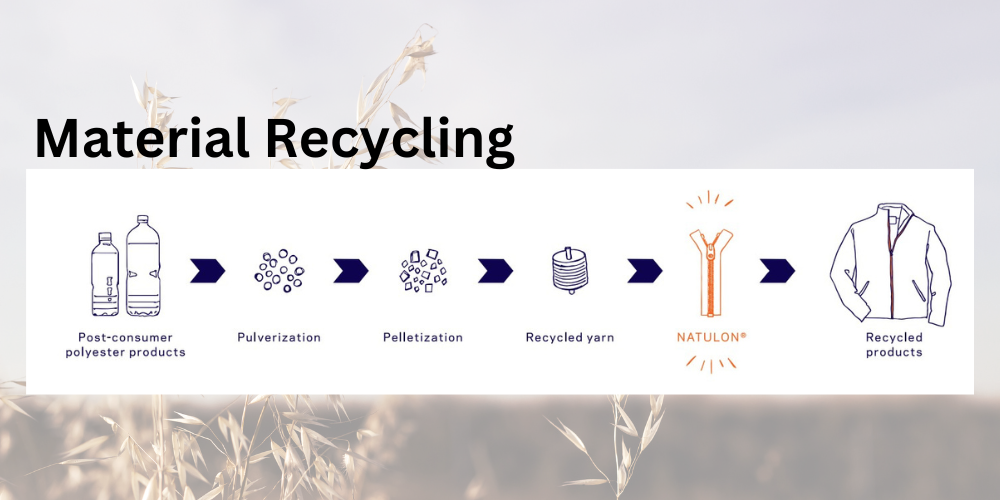
Material Recycling Process
While neither of these methods is better than the other, offering the same quality and durability, the more recognised method for producing recycled polyester is material recycling from plastic bottles. Chemical recycling, although less common, has its own advantages where it can revert discarded clothing and scraps into PET without consuming new petroleum resources. This makes circular recycling of resources within the textile and apparel industry possible.
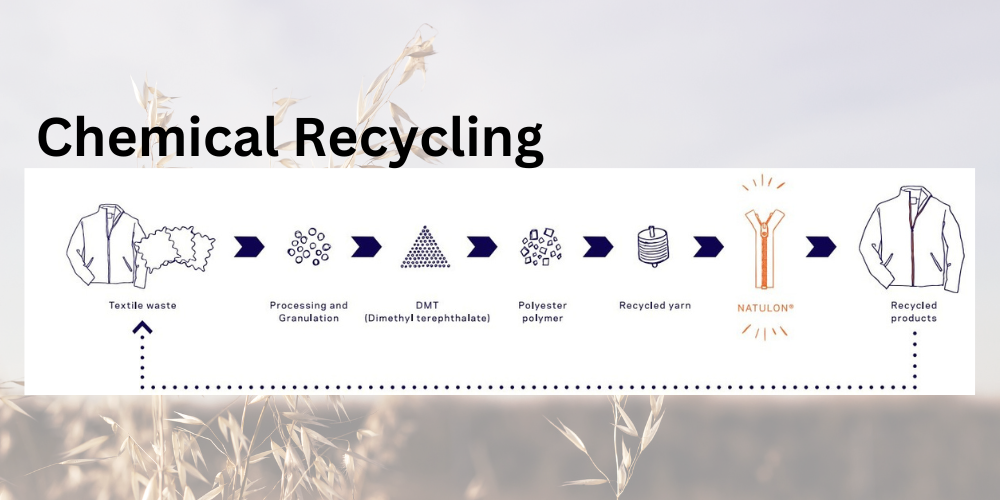
Chemical Recycling Process
Marine plastic pollution has always been an increasing area of concern. YKK then created a zipper made of polyester fibre yarn recycled from marine plastics, which is sold as the NATULON® Ocean Sourced™ zipper since 2019. In the same year, YKK Sri Lanka installed 12 PET collection cages to the factories in the Seethawake Export and Processing Zone (SEPZ) and have since been collecting PET bottles quarterly for recycling at a local vendor, ECO Spindles, where plastic wastes will be upcycled into NATULON® Ocean Sourced™ zippers.
Variations of Sustainable Zippers
As YKK continues to innovate over time, more methods of making sustainable zippers emerged, creating new types of sustainable zippers, increasing environmental benefits.
One such zipper is YKK NATULON® Plus zipper. This range of zippers features a higher ratio of recycled material as both zipper tape and elements are made from recycled materials. The NATULON® Plus zipper also has the highest level of recycled materials offered by YKK.
The material used in the coil zipper chain of NATULON Plus® zipper is made from 100% post-consumer recycled material, while the material used in VISLON® zipper chain of NATULON Plus® zipper is made from more than 59% post & pre-consumer recycled material.
Besides zippers made from recycled materials, YKK also offers sustainable zippers derived from natural resources, such as organic cotton or bio-based polyester. YKK’s GreenRise® zipper features a textile tape made with a bio-based polyester derived from sugar cane. Waste molasses from the byproducts of sugar production from sugar cane is converted to ethylene glycol, which is used as one of the components to make polyester yarn allowing a reduction in petroleum usage and associated CO2 emissions.
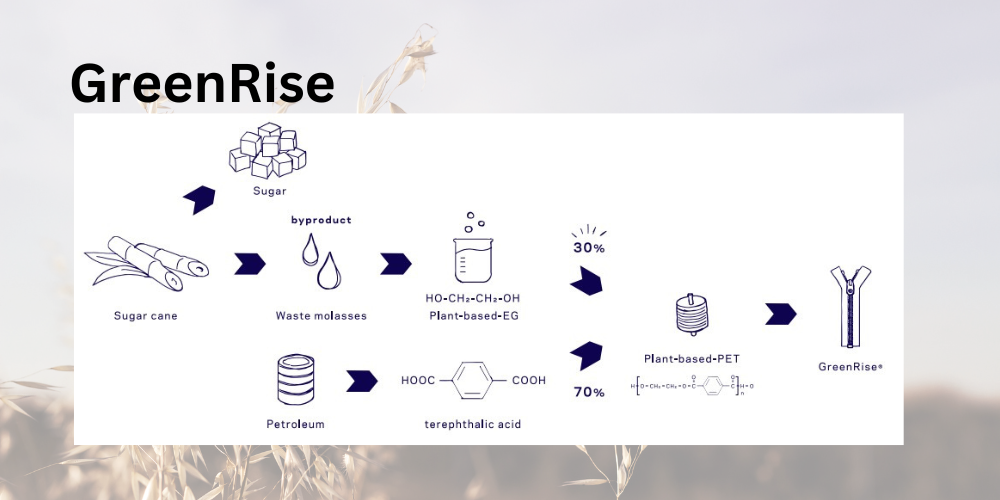
GreenRise Process
Following our aim of Sustainability Vision 2050, YKK is determined to contribute continuously and work together with the apparel industry to achieve a truly sustainable society as a member of the textile industry.
These are just some of the sustainable products available. YKK’s sustainable and zippers will be a good fit for customers looking to increase the recycled content, as well as reducing the environmental impacts of their products. Explore our YKK Digital Showroom for more sustainable zipper options. Alternatively, contact us for more information.
YKK, GreenRise, NATULON, “NATULON Plus” are registered trademarks of YKK CORPORATION in Japan and other countries/regions.
OceanSourced is a trademark of YKK CORPORATION.